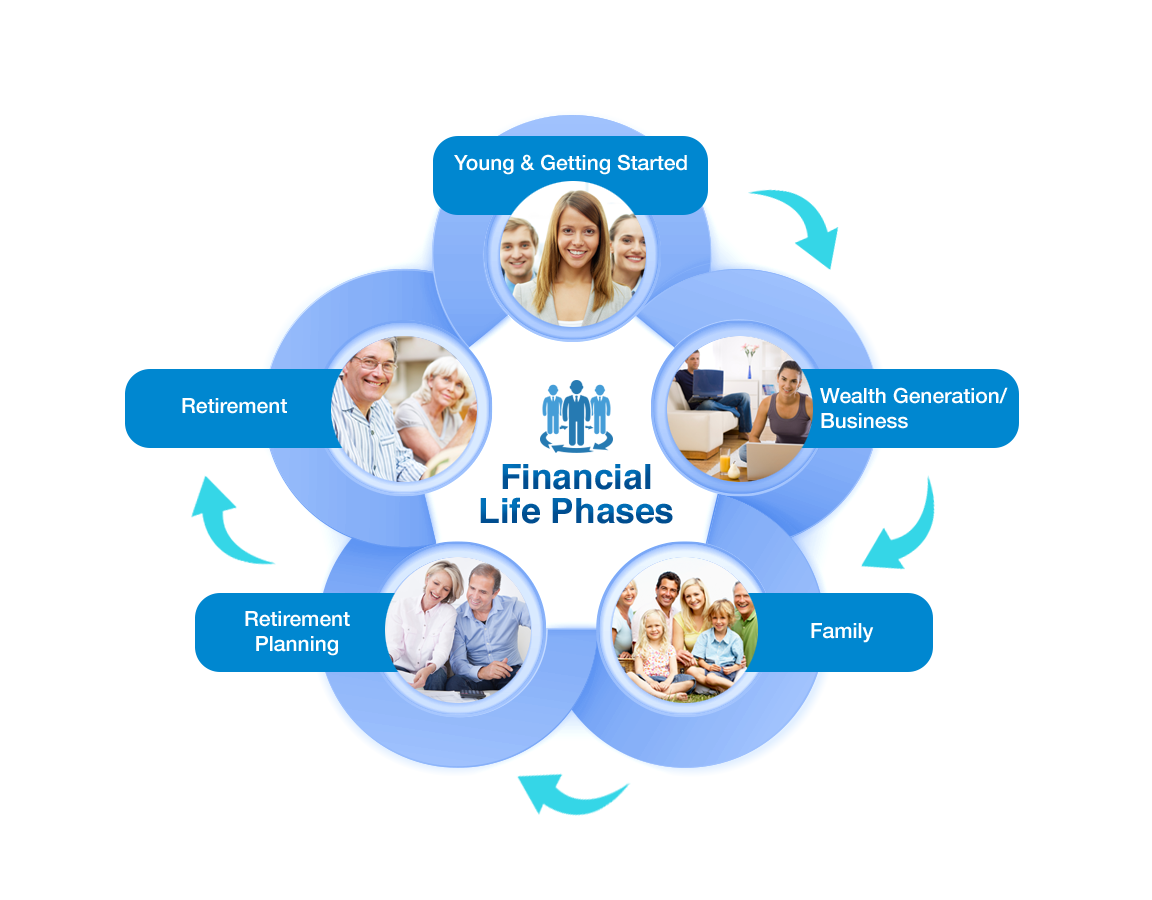
Financial Planning Is a Journey
Financial planning is not a one-time activity.
As your income, responsibilities and goals change, your financial priorities also change.
Someone starting their career may focus on building financial discipline, while a person approaching retirement may focus more on retirement income and capital preservation.
1. Starting Your Career
The early career stage is often the right time to develop good financial habits.
Important priorities can include:
- Creating an emergency fund
- Managing unnecessary debt
- Starting regular investments
- Understanding insurance requirements
- Defining short- and long-term goals
The objective at this stage is not necessarily to maximize investments, but to establish a strong financial foundation.
2. Building Wealth
As income increases, financial responsibilities often increase as well.
This stage may include:
- Home-related goals
- Family responsibilities
- Children's education
- Long-term investments
- Retirement planning
- Adequate insurance protection
At this stage, reviewing asset allocation periodically becomes increasingly important.
3. Family and Responsibility Stage
Financial planning becomes more interconnected when multiple family goals need to be managed.
For example:
Current Income → Household Expenses → Protection → Children's Goals → Retirement → Investments
A structured plan can help avoid treating each financial goal independently.
4. Pre-Retirement Stage
As retirement approaches, priorities may gradually shift.
The focus may include:
- Estimating retirement requirements
- Reviewing existing investments
- Assessing future income sources
- Reviewing insurance
- Planning liquidity
- Estate and succession considerations
5. Retirement Stage
After retirement, the objective is no longer only about accumulating wealth.
Cash-flow management becomes important.
A retirement plan may need to consider:
- Regular income requirements
- Inflation
- Healthcare expenses
- Liquidity
- Longevity
- Asset allocation
- Succession planning
Review Your Plan Regularly
A financial plan should evolve with your life.
Major events such as:
- Marriage
- Birth of a child
- Career change
- Property purchase
- Business change
- Major inheritance
- Retirement
can change financial priorities.
Conclusion
Good financial planning is about connecting your money with your life goals.
Instead of focusing only on individual investments, investors can benefit from looking at their overall financial picture.
Educational note: Financial planning should consider individual circumstances, objectives and risk profile. Investment values can fluctuate with market conditions.